The U.S. defense supply chain depends on accurate communication between manufacturers, suppliers, prime contractors, subcontractors, and government stakeholders. From technical specifications and production instructions to quality inspections and workforce training, every stage relies on people understanding the information they receive.
But what happens when those people do not share the same working language?
Language barriers can complicate technical documentation, delay supplier coordination, create confusion around manufacturing procedures, and make training less effective. In an industry where accuracy, traceability, and reliable information exchange matter, these challenges deserve attention.
For organizations operating across the U.S. defense industrial base, professional translation and interpretation can help teams communicate more clearly, provided the services are selected and delivered in accordance with applicable contractual, confidentiality, and security requirements.
The key is to treat language as part of supply chain communication planning, not as an afterthought.
Why Language Matters Across the U.S. Defense Supply Chain
The U.S. defense industrial base includes large defense manufacturers, small businesses, specialized component suppliers, technology companies, and organizations providing materials and services to the Department of Defense.
The Congressional Research Service explains the scope of this network in its Defense Primer: U.S. Defense Industrial Base.
These organizations may operate across different locations, employ multilingual workforces, and coordinate with international suppliers. Their responsibilities vary, but they share a need to exchange accurate information.
A prime contractor may depend on several suppliers for individual components. Each supplier must understand the applicable specifications, production requirements, quality expectations, and delivery schedules. A misunderstanding at one point in the process can create additional work for other teams.
Language differences are not necessarily the cause of every communication failure. Poorly written instructions, inconsistent terminology, outdated documents, and unclear responsibilities can create similar problems. When several of these factors occur together, the risk of confusion increases.
Organizations that identify these issues early can establish more reliable communication processes and determine where professional language services may help.
Five Language Challenges Facing Defense Manufacturers and Contractors
1. Technical Documentation and Manufacturing Specifications
Defense manufacturing involves detailed technical documentation, including engineering drawings, assembly instructions, equipment manuals, material specifications, maintenance procedures, and inspection criteria.
These documents often contain specialized terminology, abbreviations, measurements, and tolerances. A translation must preserve their intended meaning rather than simply produce text that reads naturally in another language.
Consider a supplier manufacturing a precision component. The production team needs to understand the required dimensions, acceptable tolerances, material specifications, and inspection procedures. Ambiguous terminology or an inconsistent translation could lead to questions, additional inspections, rejected components, or production delays.
Professional technical translation can help maintain consistency across languages. Approved glossaries, reference documents, specialist review, and controlled revision processes can further reduce discrepancies.
For organizations managing multilingual technical documentation, Sourcelingo’s professional language services provide a starting point for exploring language-support options.
The appropriate service and review process should reflect the document’s complexity, intended use, and applicable quality requirements.
2. Supplier Coordination and Cross-Border Communication
Defense supply chains depend on coordination between procurement teams, engineers, production managers, logistics specialists, and quality professionals.
These teams regularly exchange information about specifications, deadlines, design changes, component availability, and production issues. Language differences can make these conversations more difficult, particularly when participants need to discuss technical problems or clarify responsibilities.
For example, an overseas supplier may receive an updated production requirement but need clarification before implementing the change. If the discussion is delayed or misunderstood, the supplier may proceed with an incorrect assumption.
Professional interpretation can help participants communicate directly during supplier meetings, technical consultations, operational discussions, and project reviews.
Depending on the meeting format, organizations may use in-person or remote interpretation. Sourcelingo’s interpreting services cover manufacturing and industrial communication, including supplier networks, workforce training, and operational discussions.
Interpretation should complement established project-management practices. Decisions, approved changes, and contractual commitments still need to be documented through the organization’s authorized processes.
3. Workplace Safety and Manufacturing Instructions
Manufacturing environments may involve heavy machinery, electrical systems, hazardous materials, specialized equipment, and strict operating procedures.
Employees need to understand the instructions relevant to their tasks, including hazard warnings, emergency procedures, equipment operation, and personal protective equipment requirements.
When workers cannot fully understand the language used in training or written instructions, employers may face communication gaps that affect how procedures are understood and followed.
The solution is not simply to translate every document and assume the problem has been resolved. Organizations should assess the language needs of their workforce and determine which communication and training measures are appropriate for the work.
These may include translated safety materials, multilingual training resources, professional interpretation, visual instructions, and checks that confirm understanding.
Employers must also follow applicable workplace safety requirements and their established training and competency procedures.
Language support can improve access to information, but it does not replace effective safety management or verification that employees can perform their tasks safely.
4. Government Requirements, Contracts, and Controlled Information
Defense contractors must manage contractual obligations, procurement requirements, technical specifications, and documentation processes. Depending on the contract and the information involved, they may also need to address cybersecurity, information protection, export controls, and specific recordkeeping requirements.
Language differences can complicate internal explanations of these obligations or communication with suppliers responsible for meeting them.
Organizations should distinguish between documents translated to help employees understand a process and documents that must be prepared, submitted, or maintained according to particular contractual or regulatory requirements.
Translation does not replace legal review or change the obligations established by an applicable contract.
Information security also matters. The Department of Defense’s Cybersecurity Maturity Model Certification program addresses the protection of Federal Contract Information and Controlled Unclassified Information in applicable contractor environments. Relevant requirements can be found in the Defense Federal Acquisition Regulation Supplement, Subpart 204.75.
Before sharing defense-related information with a language-services provider, organizations should determine which access restrictions, confidentiality obligations, security controls, and contractual requirements apply.
They should verify that the provider, assigned personnel, and technology are appropriate for the specific assignment. An ordinary translation application or an unapproved external service should not be assumed suitable for sensitive or controlled information.
Accurate communication and appropriate information protection must work together.
5. Training, Audits, and Quality-Control Meetings
Defense manufacturing requires employees to understand procedures, identify problems, report deviations, and explain how work is performed.
Language differences can complicate these activities during training sessions, supplier audits, inspections, and cross-functional meetings.
An employee may understand a production process but struggle to explain it in English. A supplier representative may need clarification about an inspection finding. A multilingual team may also interpret technical terminology differently, even when everyone understands the general subject.
Professional interpretation can help during appropriate training sessions, technical consultations, supplier meetings, and audit-related discussions.
Translated training materials can provide additional support when employees need written information in another language.
Organizations should select the appropriate service according to the purpose of the interaction, the technical context, and any confidentiality or security restrictions. They should also ensure that formal audit findings, quality records, and corrective actions are documented through established procedures.
Translation vs. Interpretation: Which Service Does Your Organization Need?
Translation and interpretation serve different purposes. Selecting the right service begins with identifying whether the communication is written or spoken.
| Service | Primary purpose | Examples in defense manufacturing |
|---|---|---|
| Technical translation | Converts written technical content between languages | Engineering specifications, equipment manuals, maintenance instructions |
| Document translation | Converts written operational or administrative materials | Training documents, procedures, supplier materials |
| Consecutive interpretation | Conveys spoken communication in turns | Supplier meetings, technical consultations, interviews |
| Simultaneous interpretation | Conveys spoken communication in near real time | Conferences and suitable large briefings |
| Remote interpretation | Provides spoken-language support through remote technology | Virtual meetings and distributed teams |
Some situations require both services. A technical meeting may involve interpreting the discussion while participants review a translated specification.
Written documents require appropriate terminology management, quality checks, and version control. Spoken discussions require an interpreter suited to the language combination, subject matter, and meeting format.
For organizations arranging multilingual meetings or on-site activities, Sourcelingo’s interpreting solutions provide information about available interpreting formats.
The best choice depends on the communication objective, the people involved, and the requirements governing the information.
How to Reduce Language-Related Risks Across the Defense Supply Chain
Organizations do not need to wait for a misunderstanding to identify language needs. Several practical measures can make multilingual communication easier to manage.
1. Map Critical Communication Points
Identify where information passes between suppliers, contractors, facilities, and multilingual teams.
Pay particular attention to technical specifications, production instructions, safety procedures, quality requirements, maintenance documentation, and changes that affect manufacturing.
Determine where a misunderstanding could cause rework, delays, safety concerns, or inaccurate records.
2. Standardize Technical Terminology
Develop approved glossaries for recurring technical terms, component names, abbreviations, and manufacturing processes.
Where appropriate, maintain translation memories and reference materials so that repeated content uses consistent terminology. Establish a process for approving changes to terminology and technical documentation.
This becomes especially useful when several suppliers or production facilities work from related specifications.
3. Select Qualified Language Professionals
Choose translators with relevant technical experience and interpreters suited to the communication setting.
A professional who understands general business language may not have the specialist knowledge required for a complex manufacturing assignment. The appropriate qualifications and experience depend on the subject matter and the consequences of an error.
For sensitive projects, confirm that the provider and assigned personnel meet applicable confidentiality, access, contractual, and security requirements before any information is shared.
4. Maintain Document and Revision Control
A translated document should correspond to the correct approved source.
When an engineering specification or operating procedure changes, the organization should determine whether its translations also need revision. Clear version identifiers, approval records, and distribution controls help prevent employees or suppliers from relying on outdated information.
Translation should fit into the same document-management processes used for the source material.
5. Confirm That Communication Has Worked
Providing a translated document or an interpreter does not automatically establish that everyone understands the information.
Use appropriate opportunities for questions, comprehension checks, documented acknowledgments where required, and procedures for escalating uncertainty.
For safety-critical activities, follow the organization’s approved training, qualification, and competency-verification processes.
6. Protect Sensitive Information
Before engaging an external language-services provider, identify the information involved and determine how it may be accessed, transmitted, stored, and handled.
Review applicable contractual restrictions, security requirements, confidentiality obligations, and approved technology. Share only the information necessary for the assignment through authorized workflows.
For defense contractors, language-service procurement should be considered alongside existing security and compliance processes rather than treated as a separate administrative task.
Where Professional Language Services Fit Into Defense Manufacturing
Professional language services can support communication at several stages of the defense supply chain.
Engineering and production: Technical translation can help make approved specifications, equipment manuals, and manufacturing instructions accessible to multilingual teams.
Procurement and supplier management: Interpretation can support discussions about requirements, schedules, component availability, and production issues.
- Workforce training: Translated materials and appropriate interpretation can help employees access relevant instructions and participate in training.
- Quality assurance: Language support can help participants communicate during suitable inspections, supplier discussions, and quality reviews.
- Maintenance and logistics: Translated manuals and operational documents can support personnel who need to consult approved instructions in another language.
- Program management: Interpretation can help multilingual participants exchange information during meetings, briefings, and project discussions.
The appropriate service depends on the situation. Some assignments require specialist technical translation and review. Others call for interpretation during a live discussion. In some cases, clearer source-language writing and better terminology management may address part of the problem.
Sourcelingo provides professional interpretation and multilingual communication support for organizations working across language barriers. Its manufacturing interpreting services are relevant to businesses coordinating production facilities, suppliers, workforce training, and operational communication.
For defense-related assignments, organizations should establish their specific requirements before selecting a provider, particularly where controlled information, restricted access, or contractual security obligations are involved.
Improve Multilingual Communication Across Your Supply Chain
When manufacturers, suppliers, and contractors work across languages, clear communication helps people understand the information they need to perform their responsibilities.
The starting point is to identify where language differences affect technical documentation, supplier coordination, workforce training, or operational discussions. From there, organizations can establish suitable procedures, standardize terminology, and select language services that fit their actual requirements.
Sourcelingo helps organizations communicate across language barriers through professional interpreting and multilingual communication solutions.
Need language support for manufacturing operations, supplier coordination, or workforce communication?
Explore Sourcelingo’s professional interpreting services or contact Sourcelingo to discuss your organization’s language-service needs.
This article provides general operational information. Contractual, regulatory, workplace safety, cybersecurity, export-control, and information-handling obligations should be assessed against the requirements applicable to each organization and project.
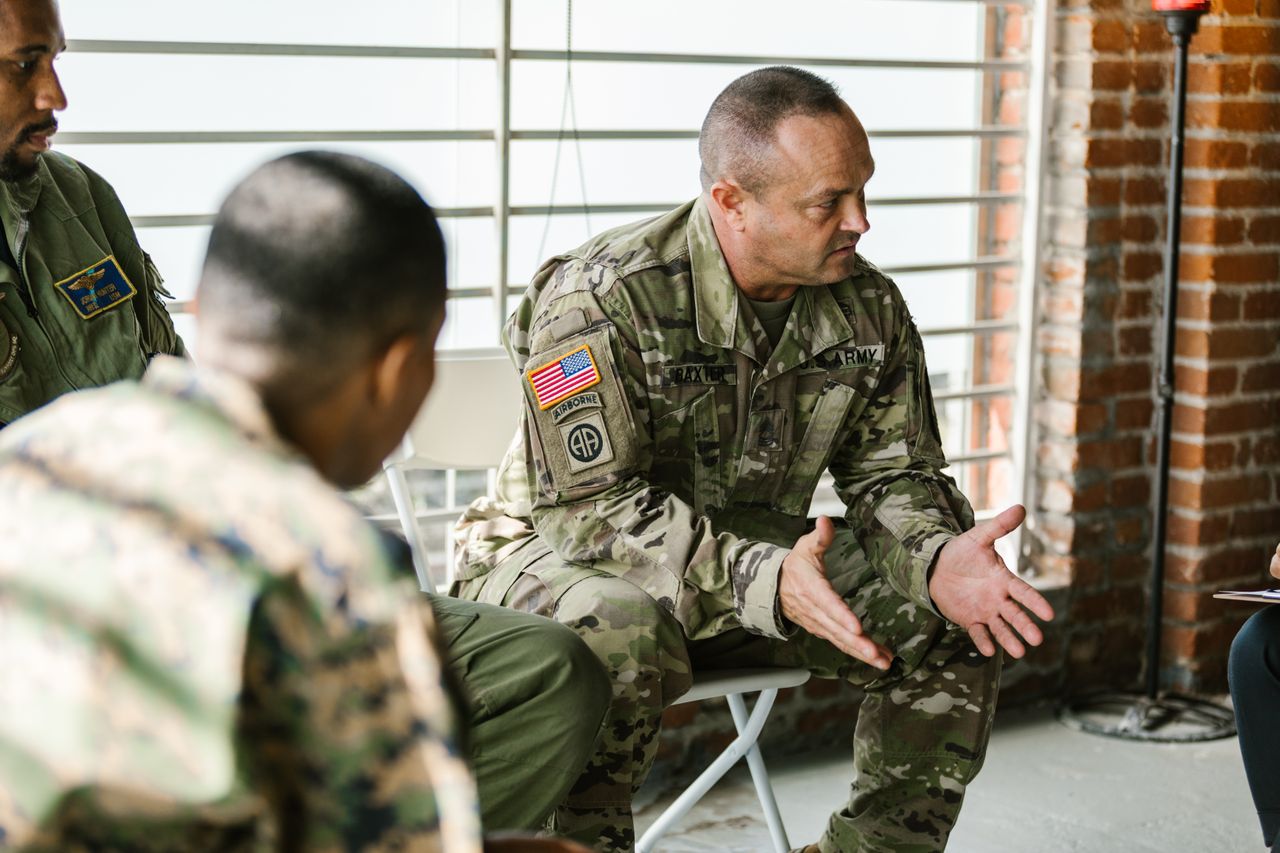
Photo by RDNE Stock project: https://www.pexels.com/photo/photo-of-soldier-expressing-thoughts-7467911/