Manufacturing has always relied on collaboration, but today’s factory floor is increasingly international. Equipment manufacturers send specialists across borders to install machinery, engineers travel to train local teams, and companies hire multilingual workforces to meet growing production demands.
These global partnerships bring valuable expertise to every project. They also introduce a challenge that can easily be overlooked: ensuring everyone understands one another.
When trainers and employees do not share the same language, even the most carefully planned training program can lose its effectiveness. Professional interpretation and translation services help bridge that gap, allowing knowledge to be shared accurately while supporting workplace safety, productivity, and employee confidence.
Why Language Access Is Essential During Factory Training
Factory training often covers highly technical topics. Employees may need to learn how to operate new equipment, troubleshoot production issues, perform routine maintenance, or follow detailed safety procedures. Every instruction matters.
If participants misunderstand even a small part of the training, the consequences can extend well beyond the classroom. Miscommunication can lead to equipment damage, production delays, inconsistent product quality, or safety risks on the factory floor.
Providing language support helps ensure employees fully understand the information being presented so they can apply it correctly in their day-to-day work.
Where Communication Challenges Commonly Occur
Language barriers can arise at almost every stage of a manufacturing project.
A technician installing new machinery may explain operating procedures in one language while employees speak another. Engineers may demonstrate maintenance processes using technical terminology that does not easily translate without industry expertise. Supervisors may also need to answer questions from employees who are more comfortable communicating in their native language.
Professional interpreters help keep these conversations clear and accurate, allowing trainers and employees to focus on learning rather than struggling to communicate.
Interpretation and Translation Work Together
Successful factory training depends on both spoken and written communication.
During live training sessions, professional interpreters facilitate conversations between trainers and employees in real time. They accurately interpret instructions, demonstrations, questions, and discussions so everyone can actively participate.
After the training ends, translated materials continue to support employees on the job. Equipment manuals, standard operating procedures, maintenance guides, safety documents, and training presentations become valuable resources that employees can reference whenever they need them.
Using both interpretation and translation creates consistency throughout the training process and helps reinforce what employees have learned.
Benefits for Manufacturers
Investing in professional language services benefits the entire organization.
Employees who clearly understand training are more likely to operate equipment correctly, follow established procedures, and perform their responsibilities with confidence. Managers spend less time correcting misunderstandings, and trainers can focus on delivering instruction instead of overcoming language barriers.
Clear communication can also contribute to:
- Improved workplace safety
- Faster employee onboarding
- Better knowledge retention
- More consistent production processes
- Reduced communication errors
- Greater employee engagement
For manufacturers operating across multiple countries or employing multilingual teams, language access becomes an investment in operational efficiency.
Choosing the Right Language Services Provider
Not every interpreter has experience in manufacturing environments. Technical terminology, production processes, and equipment-specific vocabulary require specialized knowledge.
When selecting a language services provider, look for professionals with experience supporting manufacturing and industrial clients. A qualified provider should be able to supply interpreters familiar with technical environments, deliver accurate translations of complex documentation, and offer flexible solutions such as on-site, video remote, or over-the-phone interpretation when appropriate.
Working with experienced professionals helps ensure communication remains accurate from the first day of training through ongoing operations.
Conclusion
Factory training is most effective when every employee has an equal opportunity to understand the information being shared.
Professional interpretation and translation services help manufacturers communicate across languages without sacrificing accuracy. Whether a company is installing new equipment, expanding into international markets, or training a multilingual workforce, language access supports safer workplaces, stronger collaboration, and more successful training outcomes.
Investing in clear communication is an investment in both people and performance.
Frequently Asked Questions
Why are professional interpreters important during factory training?
Professional interpreters help employees and trainers communicate accurately during equipment installation, safety instruction, technical demonstrations, and hands-on training. Clear communication reduces misunderstandings and helps employees apply what they learn more effectively.
What documents should manufacturers translate?
Manufacturers often translate equipment manuals, safety procedures, maintenance guides, standard operating procedures (SOPs), employee handbooks, and training materials so multilingual employees can easily reference important information.
Can interpretation services improve workplace safety?
Yes. Employees who fully understand safety instructions and operational procedures are better prepared to follow established protocols and reduce the risk of workplace incidents.
Which manufacturing industries benefit from language services?
Professional interpretation and translation services are valuable across many industries, including automotive, aerospace, food manufacturing, pharmaceuticals, electronics, heavy equipment, and industrial manufacturing.
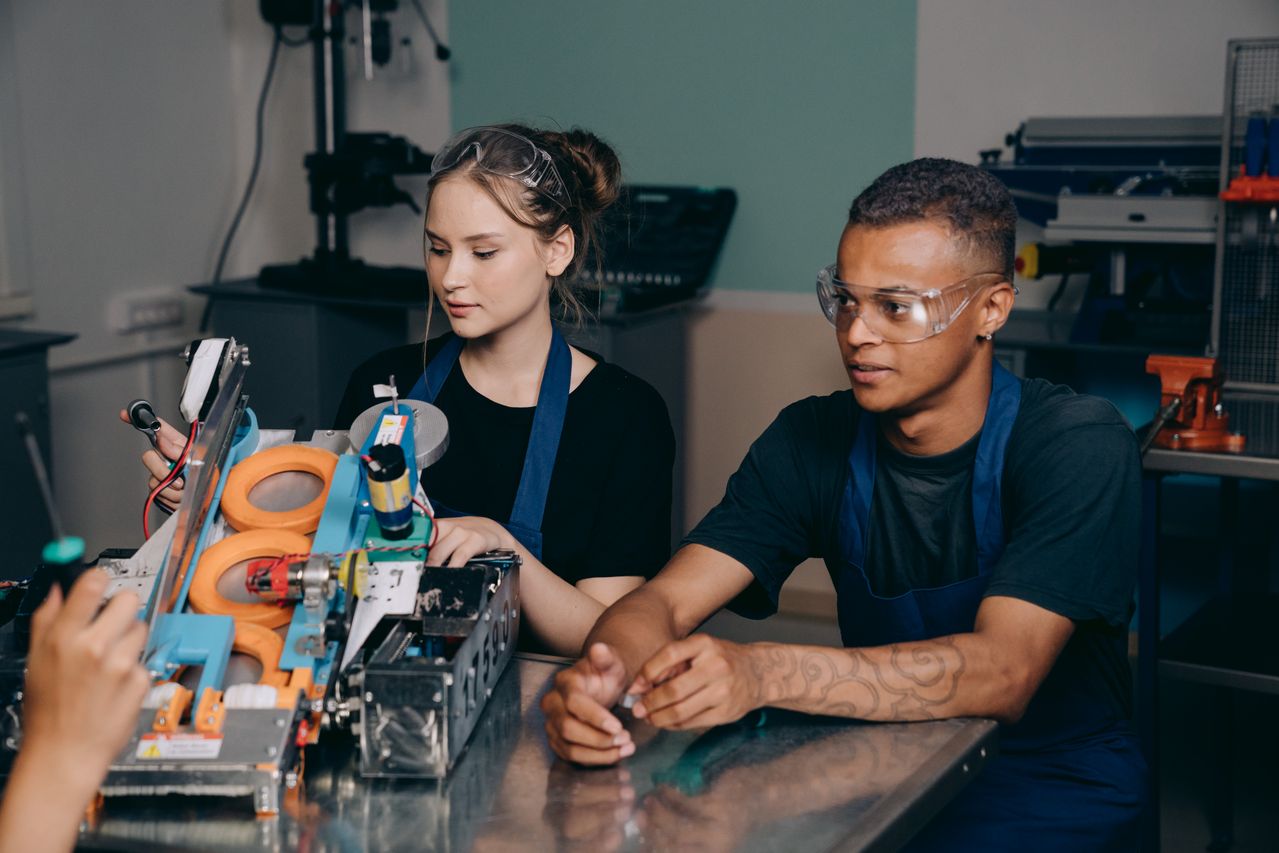
Photo by Mikhail Nilov: https://www.pexels.com/photo/man-and-woman-inside-a-factory-9242821/